


This is a series of posts interviewing people about their reading habits and recommendations. This time: Erik Schön - hacker turned executive, strategiser and writer, and head of Erlang Solutions Nordic in Stockholm.
Subscribe if you want to get regular updates.
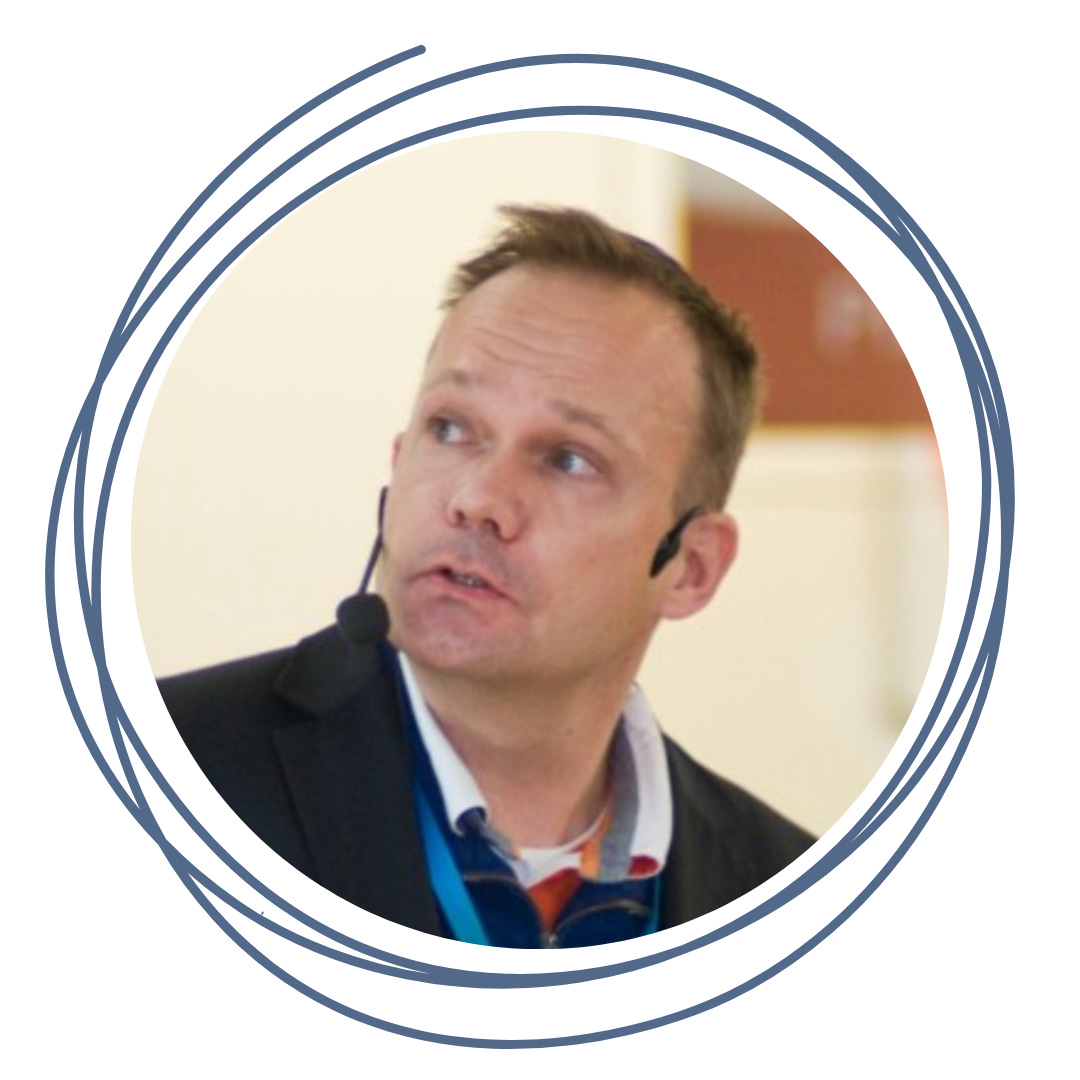
Who are you, and what do you do?
Hello, I’m Erik Schön and I’ve moved from hacker, software researcher, system engineer to executive, strategiser and writer. I’m a reflective practitioner who’s a fan of emergence, resilience and visualisation who lived, learned and worked in Sweden, Japan, USA and Germany.
I’m currently head of Erlang Solutions Nordic in Stockholm, Sweden, a remote-first consultancy/product development company with expertise on all things Elixir/Erlang/BEAM, the best European open-source programming ecosystem since Linux, optimised for digital infrastructure critical for society, e.g. fintech, media, digital health, defence and telecom, powering organisations like Apple, BBC, Cars Commerce (cars.com), Ericsson, Klarna, Maersk (the world’s 2nd largest shipping company), Mastercard, Motorola, PepsiCo and WhatsApp/Meta. In practice, this means I do whatever it takes for us to succeed with our customers, from serving “fika” for our team of skilled and experienced expert consultants to visualising strategy in interactive sessions with our customer, via arranging meetups and speaking at conferences.
What are you reading right now?
I’m currently reading several English translations of the Zhuangzi, a classic book full of inspiration on transformation, leadership and the art of living in general. What I love about it is how it uses jokes, fables, and absurd parables featuring talking animals, mythical creatures and ordinary people to convey the importance of different perspectives, self-organisation and the usefulness of the uselessness, among many many others.
And, I just finished Impact-First Product Teams – Define Success. Do Work That Matters. Be Indispensable by Matt LeMay which is the most valuable and inspirational book on product development that I’ve read in many, many years. The key idea is that everyone in an organisation should be only one step away from customer and commercial impact and answer the question “How do I and my team contribute to the success of our customers and our company” every single day. So, it’s a very important reminder about how impact (company success) is ultimately even more important than outcomes (customer success) and always more important than output (features or lines of code delivered).
Do you reread? Which book have you reread the most? Why do you think it’s important to re-read?
I do re-read and since you can never step in the same river twice, there are always new insights when re-reading your favourites. For me, the eternal wisdom of Sun Tzu and Lao Tzu from around 2,500 years ago is a large source of inspiration for how to be a better person and live a more fulfilling life. These works are highly relevant in our turbulent times since the patterns originally evolved over hundreds of years of pandemics, wars, revolutions and technological breakthroughs, and since we are still human beings with needs, ambitions, fears, scars and hopes.
When it comes to fiction, I re-read Orwell’s 1984 and Huxley’s Brave New World from time to time to remind myself of the dangers of totalitarianism based on fear, censorship, surveillance, genetic engineering, endless pleasure and consumerism. A new discovery for me is E.M. Forster’s short story The Machine Stops (from 1909!) on how the machine, handling all communication and conveniences, becomes dogma and its inner workings a matter of faith. So, eventually everyone has forgotten how it works.
Which book(s) changed how you see the world?
Wow, what an amazing question! A few come to mind – in addition to Sun Tzu and Lao Tzu already mentioned above:
All the books on how to visualise and see the world in a beautiful, truthful way by Edward Tufte – the “da Vinci of data” and “Galileo of graphics” – starting from Visual Explanations: Images and Quantities, Evidence and Narrative.
Gödel, Escher, Bach – An Eternal Golden Braid by Douglas Hofstadter, that took me beyond code and hacking into the wonderful world of philosophy, music and art and how they interconnect through human ingenuity, creativity and intelligence.
Is there a book with which you disagree but can’t stop thinking about?
That’s another great question! I’ve tried to read several novels by Yukio Mishima but I never get more than a few chapters in since his world is so utterly different from the world I want to live in. Being open to different perspectives is important to me so from time to time I challenge myself with yet another Mishima novel, so far without success.
If someone wants to understand Erlang philosophy or gauge whether it’s “their language” - both technically and as a philosophy - which books would you say are “mandatory” for them to read?
The following books combine principles and practices of Erlang/Elixir/BEAM (the Erlang Virtual Machine) in a pedagogical way:
Joe Armstrong’s thesis: Making reliable distributed systems in the presence of software errors
Francesco Cesarini and Steve Vinoski’s Designing for Scalability with Erlang/OTP
Saša Jurić’s Elixir in Action, 3rd Edition on how to build fault-tolerant, scalable, highly concurrent systems
As a bonus, a post, a video and article to get you started:
LinkedIn post: Why Elixir?
Conference talk: Concurrency-Oriented Programming, video (20 min), presentation (23 pages)
Article: Elixir & We’ve Been There Before (Or: The Aqueduct Had Running Water All Along) (34 min read)
Have you read books that are not older than 10 years that have made an equally significant impact on you as some of the “classics”?
Contemporary fiction writers who challenge and inspire me include Douglas Coupland (e.g. Miss Wyoming, Eleanor Rigby), William Gibson (e.g. The Peripheral and Agency), Peter Høeg (e.g. Smilla’s Sense of Snow and The Susan Effect) and Haruki Murakami (e.g. The Wind-Up Bird Chronicles, 1Q84) – even though his understanding and portraits of women are far from satisfactory. The common theme is magical realism with unexpected moves in time and space.
Where can people find you, and what are you working on that they should know about?
I’m on LinkedIn and you can find my work on leadership, strategy and ways of working, e.g. the books The Art of Change, The Art of Leadership and The Art of Strategy – exploring timeless patterns for sustainable success in turbulent times helping you to think and act from first principles while being mindful of context – at Yokoso Press, Medium and YouTube.
Want in?
If you want to hear recommendations from someone specific: tell me who, and I’ll try to beg them to share 😃)
If you want to contribute yourself: drop me an email at post@readsthis.org and I’ll send you the questions. Nothing formal, just 4-5 questions to get to know you as a reader.
I hope you are reading. Especially in this day and age, I think that matters even more.
Love, Nune